

Skip to Content
  • Bain.com Home
  • Subscribe
  • Connect
  • About NPS
    Main menu

    About NPS

    • Understanding the System
    • The History
    • The Benefits
    • Three Types of Scores
    • Companies Using NPS
    • NPS in B2B
    Recommended reading: A collection of our best thinking
    Important Concepts
    • Measuring Your Score
    • Employee NPS
    • NPS and Growth
    • Predictive NPS
  • Resources
    Main menu

    Resources

    • NPS Prism® Benchmarks
    • NPS Loyalty Forum
    • Additional Vendors
    • Recommended Videos
    • CX Standards
    Listen to The Customer Confidential Podcast
    Interactive tool
    • Customer Love Quiz
  • Book
  • Insights
  • Contact
    Main menu

    Contact

    • Workshops and Speaking
    • Trademarks and Licenses
  • Bain.com Home
  • Subscribe
  • Connect
  • About NPS
    • About NPS

      • Understanding the System
      • The History
      • The Benefits
      • Three Types of Scores
      • Companies Using NPS
      • NPS in B2B
      Recommended reading: A collection of our best thinking
      Important Concepts
      • Measuring Your Score
      • Employee NPS
      • NPS and Growth
      • Predictive NPS
  • Resources
    • Resources

      • NPS Prism® Benchmarks
      • NPS Loyalty Forum
      • Additional Vendors
      • Recommended Videos
      • CX Standards
      Listen to The Customer Confidential Podcast
      Interactive tool
      • Customer Love Quiz
  • Book
  • Insights
  • Contact
    • Contact Us

      • Workshops and Speaking
      • Trademarks and Licenses
    Popular Searches
    • Net Promoter Score
    • Employee NPS
    • Benchmarks
    Your Previous Searches
      Recently Visited Pages

      Content added to Red Folder

      Red Folder (0)

      Removed from Red Folder

      Red Folder (0)

      LinkedIn

      Bad Profits 2021: Shrinkflation

      Bad Profits 2021: Shrinkflation

      Instead of offering less for the same money, use innovation and transparency to overcome inflationary pressures and keep wowing customers.

      By Fred Reichheld, Darci Darnell, and Maureen Burns

      • min read
      }

      Article

      Bad Profits 2021: Shrinkflation
      en

      This article originally appeared on LinkedIn.

      Inflation is worse than you think. We all know that gas is expensive—averaging $3.41 a gallon in the US as of mid-November—and that food prices and rents are climbing. Fast Company calculates that a typical Thanksgiving dinner will cost you 14% more this year.

      But October’s overall 6.2% surge in consumer prices, while the biggest in more than 30 years, tells only part of the story. It’s missing shadow inflation, also called “shrinkflation,” the practice of giving you less for the same price. As the New York Times’s The Upshot recently explained in a column titled “There Is Shadow Inflation Taking Place All Around Us,” this form of inflation is simply not captured in any of the government data.
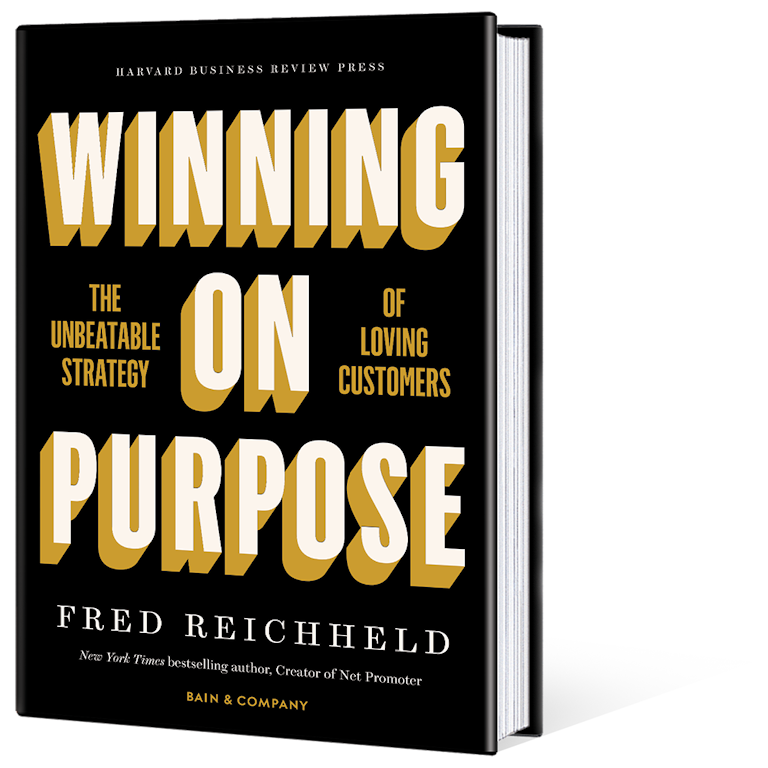
      Read the Bain Book

      Winning on Purpose: The Unbeatable Strategy of Loving Customers

      This new book by Fred Reichheld, Darci Darnell, and Maureen Burns demonstrates that great leaders embrace a higher purpose to win, and Net Promoter® shines as their guiding star.

      In our own lives, we’ve encountered proof that inflation is much higher than 6%, and you likely have too. Sit down at a restaurant and order using the QR code so the harried waiter can cover two times the tables. Buying a new car? Chip shortages and supply chain bottlenecks mean you had better be flexible on color. Even Amazon, a company with an avowed desire to always put the customer first and a pretty strong track record of doing so, recently announced that Prime subscriptions would no longer include free Whole Foods delivery. Prime members still pay $119 a year, but now they also have to pay $9.95 any time they want something from Whole Foods at their doorstep.

      Businesses face large challenges right now, from labor shortages to supply chain disruptions, but giving customers less for their money is the opposite of customer love. Leaders can make the best of a tough situation by doubling down on innovation and transparency.

      One of the chapters in our upcoming book, Winning on Purpose (publishing December 7!), is called “Be Remarkable: Not Merely Satisfactory.” Examples include former Discover CEO David Nelms’s customer-centric decision to risk $200 million in late-fee revenues by sending customers an email alert the day before the fee would be levied. Or Costco’s decision to sell Calvin Klein jeans at the company’s standard 14% markup amid ample evidence that there was more money on the table just waiting to be scooped up.

      NPS exemplars regularly achieve the remarkable, but it takes effort. They work in systematic and ever-changing ways. Costco’s cofounder and former CEO Jim Sinegal says that, in his view, simply providing the best everyday low price in Costco warehouse stores wasn’t enough for the company to thrive in the long term. The human brain is a bit perverse in this regard: As soon as it discerns a pattern, it starts to get bored with that pattern. We start out justifiably excited about something new—let’s say, some very good thing—but over time we lose interest even though that thing remains very good.

      We need some surprise to wow us and inspire us to talk about that experience with friends and colleagues. That’s why Costco strives to turn every visit into a treasure hunt, with fresh inventory and incredible bargains. The company rewards your need to discover. It amps up your adrenaline levels by (truthfully) suggesting that you had better grab this great deal now because it’s likely to be sold out well before your next visit. And again, that’s pretty much true, which is why you don’t end up feeling manipulated. Indeed, Costco makes it easy to return any item, removing the risk of buyer’s remorse. Costco can’t be immune to the inflationary pressure bearing down on the economy, but a history of working hard at being remarkable has it adapting from a position of strength.

      Innovators are finding new ways to be remarkable that engage customers and give them a sense of fun. Apps like Strava and Duolingo are employing gamification to make exercise and language study competitive, challenging, and more enjoyable. Dunkin’s scratch games and sweepstakes feature language and concepts—like streaks—that Snapchat has made familiar to young consumers, helping to push up repeat visits.

      Innovations like these are important, but so is transparency. If you have to raise prices, be clear about why. Take the time to walk customers through the math. If labor costs have doubled, let them know that. You may find customers appreciate that you are taking care of your employees. And for those who just can’t afford the higher price, tiered pricing can help. For a service provider like a gym or a cleaning service, that might mean adding a lower-priced plan for people who use the service less frequently.

      No one wants to pay more, but inflation doesn’t have to make your company any less remarkable.

      Authors
      • Headshot of Fred Reichheld
        Fred Reichheld
        Bain Fellow, Boston
      • Headshot of Darci Darnell
        Darci Darnell
        Partner, Chicago
      • Headshot of Maureen Burns
        Maureen Burns
        Partner, Boston
      Contact us
      Loyalty Economics
      Can You Be a Great Leader—Or Build a Great Company—Without Loving Customers?

      Here’s our customer-centric manifesto for any company striving for greatness.

      More
      Loyalty Economics
      Executives Explain What Customer Love Means to Them

      Certain common themes emerged when we asked corporate leaders how they practice customer love.

      More
      Loyalty Economics
      Customer Love Story: Costco

      This retailer pays employees well and rewards shareholders with above-market performance. The secret: It’s all about the customer.

      More
      Loyalty Economics
      Boning Up on Behavioral Economics: A Podcast Q&A with Maurice FitzGerald

      Why is saying "I'm sorry" so hard for some people? Rob Markey and Maurice FitzGerald discuss the crucial role of behavioral economics.

      More
      Loyalty Economics
      Set Perfection as the Goal: Leadership Lessons from Former Vanguard CEO Jack Brennan

      Jack Brennan, former CEO of Vanguard, shares how the mutual fund company has used Net Promoter System® to put customer loyalty at the center of its business.

      More
      November 24, 2021
      Tags
      • Leadership
      • Loyalty Economics

      Want to continue the conversation?

      We offer unparalleled analytic and organizational tools for the Net Promoter System. Together, we can create an enduring customer-centric culture.

      Selected for you

      Customer Love Quiz

      Learn how customer-centric your organization is today and receive practical suggestions for how to move forward on the path. 

      Selected for you

      Get the latest on loyalty in your inbox. Our quarterly Loyalty Insights newsletter offers our best thinking and tips on running the Net Promoter System.

      *I have read the Privacy Policy and agree to its terms.

      Please read and agree to the Privacy Policy.
      Bain & Company
      Contact us Connect Subscribe Terms of use Privacy Environmental Policy Sustainable Procurement Policy Sitemap

      Net Promoter®, NPS®, NPS Prism®, Net Promoter System®, and the NPS-related emoticons are registered trademarks of Bain & Company, Inc., NICE Systems, Inc., and Fred Reichheld. Net Promoter Score℠ is a service mark of Bain & Company, Inc., NICE Systems, Inc., and Fred Reichheld.